
Inside NVIDIA’s $105 Billion AI Infrastructure Guarantee
NVIDIA’s $105 billion guarantee is not a direct investment. The public contract shows how it supports the lease, power and transmission structure—and the options NVIDIA has if OpenAI defaults.
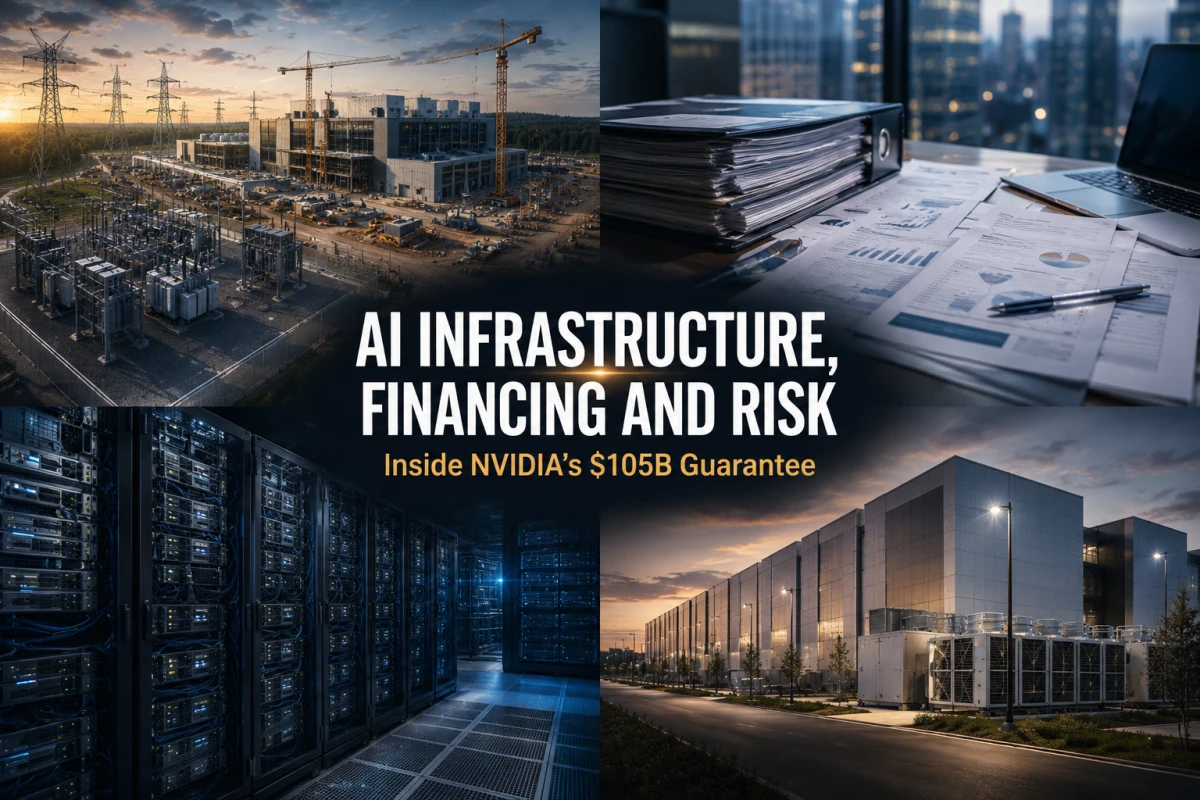
The headline figure is easy to misunderstand. NVIDIA’s $105 billion guarantee for infrastructure connected to OpenAI is not a direct investment, an automatic payment or a loss already sitting on NVIDIA’s books.
Now that Exhibit 10.1 and NVIDIA’s fuller Q2 FY2027 10-Q are public, it is possible to see more clearly what the structure does. NVIDIA is not only supplying compute to the project. Its credit support is built into the lease, power and transmission arrangement behind the site.
What the $105 billion figure means
The figure is an aggregate cap for NVIDIA’s SB Energy guarantees, linked to leases for about 4.25 gigawatts of IT load at the PORTS Technology Campus in Pike County, Ohio. It is not a direct NVIDIA investment, an automatic payout or a realised loss.
The guarantee is part of what makes the project possible
The most important new detail is contractual. Exhibit 10.1 says the landlord is to enter into the lease, while a Power Affiliate is to enter into a power purchase agreement and a transmission agreement, only if NVIDIA executes and delivers the guarantee. Those agreements are collectively called the Project Agreements.
NVIDIA also gets contractual consent rights
Exhibit 10.1 gives NVIDIA a defined say over changes to the Project Agreements while the guarantee is in force. Amendments to those agreements, including their schedules and exhibits, require NVIDIA’s express written consent. If an amendment is made without that consent, NVIDIA is not liable for the resulting terms under the guarantee. If it later assumes the lease, it is also not required to comply with those unapproved terms.

That is significant contractual influence. The company backing part of the infrastructure risk can object to changes that would alter the risk it agreed to take. But the distinction matters: a consent right is not ownership of PORTS-Pike, and the public documents do not establish unlimited operational control over the campus.
What happens if OpenAI defaults?
The public documents outline a process rather than a single automatic outcome. NVIDIA has the right, but not the obligation, to cure a tenant default before the landlord or Power Affiliate terminates the lease, power purchase agreement or transmission agreement for that reason. If a relevant insolvency default occurs, or a monetary default reaches the required stage and the landlord intends to terminate the lease, NVIDIA is to receive a Default Trigger Notice.
NVIDIA then has a verification period to assess whether the trigger conditions have been met. Before that process runs its course, the landlord cannot exercise remedies against the tenant or terminate the lease or another Project Agreement. The length of the period and some payment details are redacted in the public filing.
After that, NVIDIA can choose among several routes: assume the lease itself or through another entity it designates as the new tenant; require commercially reasonable efforts to relet the premises; select the contract’s Sale Option; allow the lease to be terminated; or defer the decision for a limited period while bearing specified costs. The contract shows the menu of options, but not the full conditions, economics or cost allocation behind each one.
The replacement-tenant question is still unanswered
This is where the public record stops short of the most tempting conclusion. NVIDIA’s 10-Q says the campus will exclusively host NVIDIA compute under 20-year leases to OpenAI, subject to limited exceptions. But the public material does not verify that a replacement tenant must use NVIDIA compute, that exclusivity automatically survives an OpenAI default, or that NVIDIA can generally choose or approve every replacement tenant.
NVIDIA can designate a new tenant in an assumption scenario, while the landlord must use commercially reasonable efforts to relet the site if the Relet Option is used. The partly redacted terms do not establish permanent control over who occupies the site or what hardware they use.
NVIDIA itself describes the downside
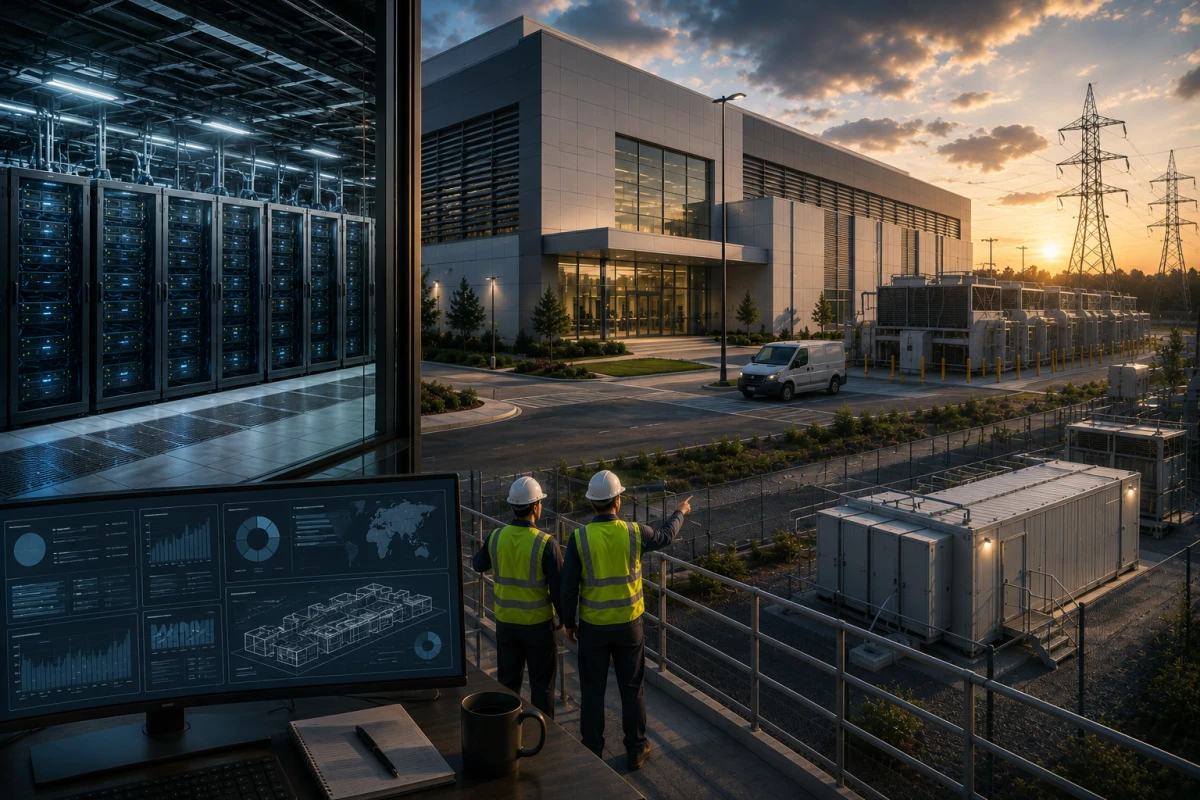
NVIDIA’s own risk disclosure is unusually direct about the uncertainty. It warns that a replacement tenant or buyer may not be found on acceptable terms or in time; a new lease or sale may produce less value than expected; and NVIDIA may have to carry long-term lease costs or make substantial payments.
OpenAI has agreed to reimburse and indemnify NVIDIA for certain losses, according to the 10-Q. But NVIDIA also says it may not recover those amounts promptly or in full. That is not a prediction that OpenAI will default. It is NVIDIA’s description of the risk it has accepted if the structure fails to perform as planned.
The $105 billion figure needs context
The guarantees cover approximately 4.25 GW of IT load, with exposure generally becoming effective as leases commence and growing as nine data-center phases are placed into service. NVIDIA says the first phase is expected to begin in fiscal year 2029, and that its exposure declines as OpenAI fulfils lease payments over each phase’s 20-year term.
The public filings do not reveal the Guaranteed Minimum Value curve in Schedule II, the Covered Loss Amount, the discount rate, the credit-rating thresholds or several remedy costs. Those details are redacted, so the exact financial outcome of a failure scenario cannot be reconstructed.
This is part of a broader infrastructure push
Ohio is one piece of a wider shift in NVIDIA’s role. Its Q2 10-Q separately reports up to $105 billion in SB Energy guarantees, $3.5 billion of maximum gross exposure in other land, power and shell guarantees for AI clouds, $279 billion in supply and capacity commitments, $29 billion in cloud service agreements, $25 billion in data-center leases not yet commenced, $99 billion in equity investments and $25 billion in equity investment commitments.
Those are different economic categories, not a single total risk number. Together, they show a company trying to secure the conditions required for future compute demand. NVIDIA says shortages of land, power, shell and capital can delay customers’ deployments and affect future revenue. Its response is to help secure infrastructure, capacity and credit support where it sees productive long-term demand.
AI demand may still be strong. Yet the contracts behind the buildout show that future capacity depends on far more than chips: it depends on power, transmission, credit, tenants, long leases and the value of infrastructure years into the future. NVIDIA’s guarantee makes those layers visible. If a major tenant defaults, the question is not only who carries the financial risk, but who has the contractual ability to shape what happens next.
💬 What do you think?
When a technology supplier guarantees the infrastructure that will run its own systems, where should the line be drawn between supporting growth and taking on infrastructure risk?
Share your thoughts in the comments.
📚 Related articles
Vad är din reaktion?
 Gilla
0
Gilla
0
 Ogilla
0
Ogilla
0
 Kärlek
0
Kärlek
0
 Rolig
0
Rolig
0
 Wow
0
Wow
0
 Ledsen
0
Ledsen
0
 Arg
0
Arg
0

Hej, jag heter Staffan Carlsson
Jag är grundare och ansvarig utgivare för NextNet.se – en svensk nyhetsplattform med fokus på artificiell intelligens, teknik, cybersäkerhet och digital innovation.
Varför NextNet?
Jag startade NextNet med målet att skapa en modern och lättillgänglig nyhetssajt där teknik och AI står i centrum. Den tekniska utvecklingen går snabbare än någonsin, och jag tror att det är viktigare än någonsin att kunna förstå vad som händer – utan att behöva vara expert.
Genom NextNet vill jag lyfta fram nyheter, analyser och trender som hjälper läsare att navigera i en allt mer digital värld.
Mitt teknikintresse
Teknik har varit en stor del av mitt liv under många år. Jag fascineras av hur innovation, internet och artificiell intelligens förändrar sättet vi arbetar, kommunicerar och bygger framtidens samhälle.
Utöver arbetet med NextNet ägnar jag mycket tid åt webbplattformar, servermiljöer, AI-lösningar och digitala projekt där nyfikenhet och lärande alltid står i centrum.
Min vision
Jag vill att NextNet ska vara en trovärdig och inspirerande källa för alla som vill följa utvecklingen inom AI, teknik och digitalisering – oavsett tidigare kunskapsnivå.
AI-drivna nyheter för en digital värld.














Kommentarer (0)