
OpenAI’s Planned Cursor Cutoff Exposes a New Layer of AI Competition: Access
OpenAI plans to wind down model access through Cursor after SpaceX acquired the coding platform, with a cutoff proposed rather than completed. The dispute shows how change-of-control terms, multi-model platforms and supplier dependencies can become strategic parts of AI competition.

OpenAI has said it plans to wind down the agreement that provides its models to Cursor, the AI coding platform now owned by SpaceX. The proposed shutoff date is November 12, 2026. The decision is not yet a completed cutoff, and OpenAI says it is giving the maximum notice allowed under its contract.
That makes this more than another dispute between Elon Musk and OpenAI. Cursor has been a place where developers and companies can choose between models from several suppliers. Its change in ownership raises a harder question for the wider AI market: what happens when a multi-model application layer becomes part of a company that is also building its own models, compute infrastructure and distribution channels?
What is planned - and what is not known
OpenAI has announced an intention to end its model-supply agreement with Cursor, not a completed service shutdown. The public record does not establish whether the parties will reach another arrangement before November 12, how Cursor’s future model mix will develop or how other providers will respond.
What OpenAI actually decided
In its public statement, OpenAI said it had notified SpaceX that it intended to wind down the contract supplying OpenAI models to Cursor. The company proposed November 12 as the shutoff date and said its custom agreement with Cursor gives it a limited window to cancel after a change of control.
OpenAI also said it was using the maximum notice permitted by the contract, in part to give developers time to retain access during a transition. It said it cares about broad developer access to its models, while also saying it could not be confident that SpaceX would use its technology within OpenAI’s terms of service.
That rationale must be read carefully. OpenAI cites its experience with Musk companies and describes compliance and safety concerns, including the need to control use of its upcoming Astra model. Those are OpenAI’s own claims and assessment. They are not, by themselves, an independent finding that SpaceX or Cursor has breached the current Cursor agreement.
Why the acquisition changes the context
The ownership change is not speculative. A SpaceX Form 8-K says the merger became effective on August 14, 2026. Under the transaction, Anysphere - the company behind Cursor - survived as a wholly owned SpaceX subsidiary. The filing gives Cursor an implied equity value of $60 billion.
Cursor’s own announcement describes the completed acquisition as the next step after an April partnership with SpaceXAI. Cursor says it will gain access to SpaceX’s GPU capacity to build stronger, less expensive models and presents Grok 4.6 as an early indication of what the two organisations can build together.
Those statements do not prove that Cursor will stop offering outside models, or that any supplier must withdraw. But they do change the commercial setting in which model providers decide whether, and on what terms, to supply the platform.
Cursor is still documented as a multi-model layer
Cursor’s current Models & Pricing documentation lists frontier models from OpenAI, Anthropic, Google and SpaceXAI. It also distinguishes between “Cursor Models” - including Grok 4.6, Grok 4.5 and Composer 2.5 - and a separate pool for third-party models, charged at the provider’s API price.
That distinction matters. A multi-model platform does not have to be neutral in every commercial sense to give users a choice. It can build its own models, set its own routing and pricing rules, and still offer third-party models. But a platform’s practical neutrality can be tested when ownership, model development and compute supply become more closely connected.
For developers, the value of this model has been the ability to use different systems through one workflow. For enterprise customers, it can mean less need to redesign a development environment whenever model performance, price, policy or availability changes. That value depends not only on the models visible in a menu today, but on the continuity of the agreements behind them.
SpaceX’s stated vertical-integration strategy
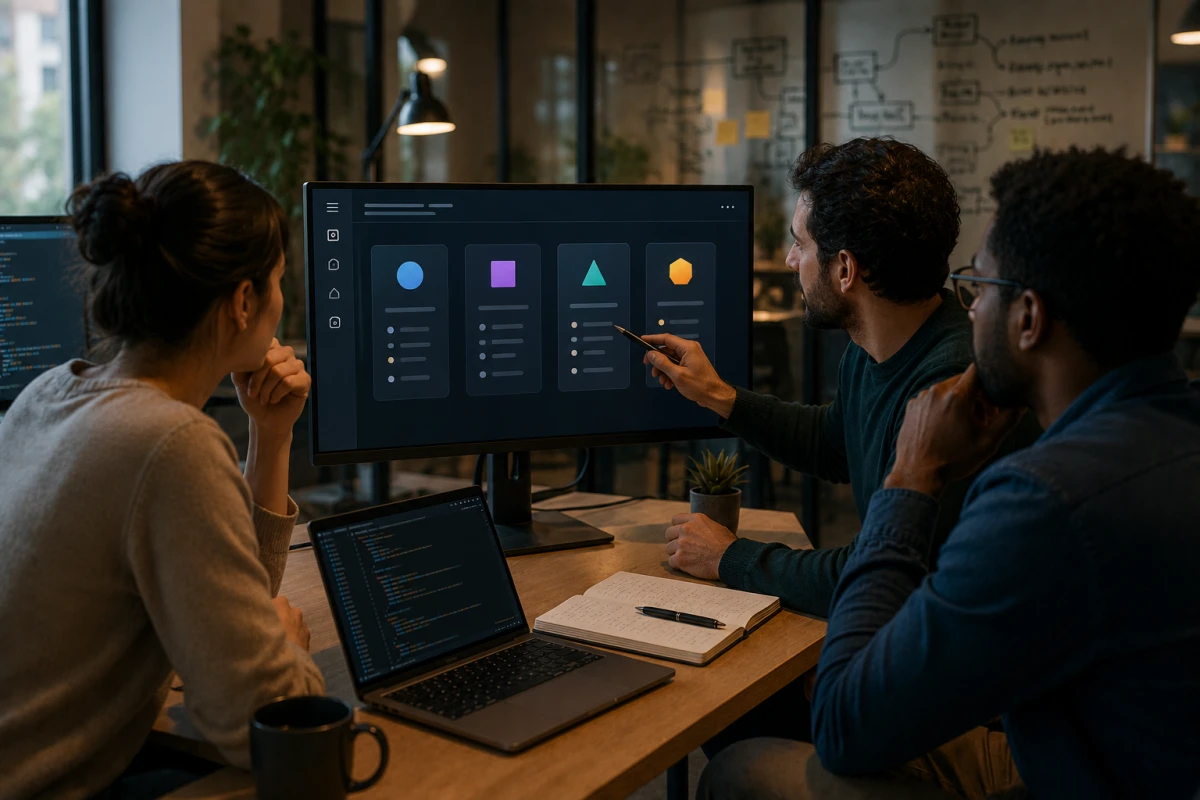
The broader strategy is explicit in earlier SpaceX SEC material. SpaceX described its Cursor compute agreement as part of an effort to vertically integrate “compute infrastructure, models, and applications.” It said it would provide GPU cluster capacity to Cursor, collaborate on improving Grok and potentially jointly develop AI models.
SpaceX’s filing is a statement of strategy and intended collaboration, not proof of a predetermined Cursor product outcome. Still, it illustrates why access has become a strategic issue. The same group can now connect large-scale compute, the Grok model family, a developer application layer and other distribution assets. That may create efficiencies. It can also give outside suppliers a new set of questions about data handling, contractual protections, product positioning and the long-term role of their models on the platform.
Competition at one layer, shared infrastructure at another
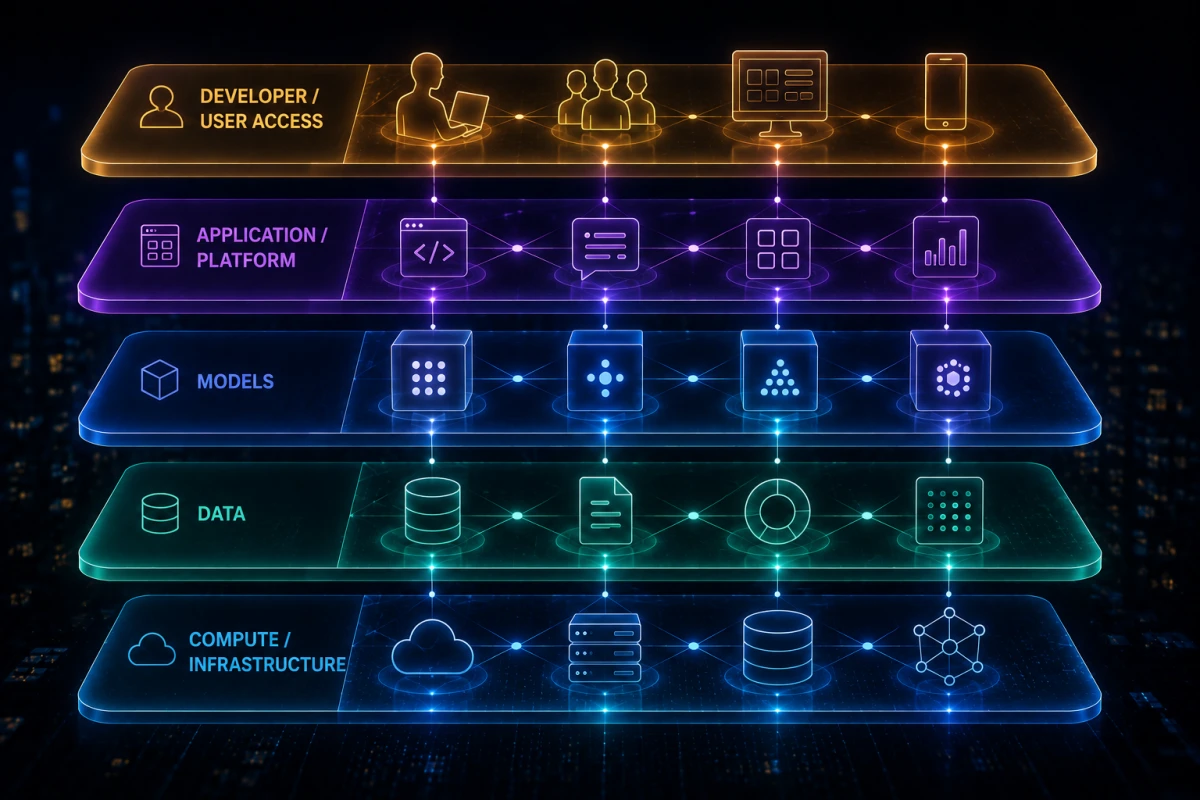
The OpenAI–Cursor dispute sits inside a wider ecosystem in which both OpenAI and SpaceXAI have documented relationships with NVIDIA at the compute and infrastructure layer. NVIDIA’s PORTS filing says an OpenAI affiliate will be the tenant for about 4.25 gigawatts of IT capacity in Ohio. NVIDIA’s up-to-$105 billion obligation is conditional credit support for land, power and shell, not a direct investment in OpenAI; the planned deployment is also forward-looking. Separately, NVIDIA says SpaceXAI will deploy Vera CPUs, expand Grok infrastructure with Vera Rubin and plans a Starmind system. Those are NVIDIA’s forward-looking statements. The structural point is narrower: companies can compete at one layer of AI while depending on the same infrastructure provider at another. No direct connection between the Cursor cutoff and NVIDIA has been established.
Different suppliers can make different choices
The public responses so far point in different directions. Reuters reported that Cursor co-founder Michael Truell said the company was speaking with OpenAI to resolve the issue. Reuters also reported that Anthropic co-founder Tom Brown said Anthropic planned to increase compute to support Claude models in Cursor.
Those are not equivalent commitments. They are statements by the companies or their representatives, made in different circumstances. Nor do they establish a permanent alliance between Anthropic and SpaceX. They do show that model access is not determined by a single industry-wide rule: each provider can make its own commercial, safety and contractual assessment of the same ownership change.
Truell has also said publicly that OpenAI models account for about 5% of Cursor traffic. That figure is a statement from Truell, not independently verified traffic data. Even if it is accurate, the percentage alone does not settle how important OpenAI access is to particular teams, workflows or enterprise contracts.
Google, enterprise customers and the hidden due-diligence question
Google is part of Cursor’s current documented model selection through Gemini. But no relevant public response from Google has been verified. There is no basis in the public material reviewed here to say that Google will change its relationship with Cursor, or that it will not.
For enterprise customers, that uncertainty is the more durable issue. A company may assess a developer platform not only on coding features and model quality, but also on whether important model-supply agreements survive a change in ownership. That does not make every model contract a merger obstacle. It does suggest that availability, transition rights and substitute-model options may become more relevant parts of vendor and M&A due diligence.
The same applies to developers, although the effect will vary. A team using several models may have alternatives that another team does not. A team relying on a particular model’s behaviour, pricing or compliance terms may face a more material change. None of that means users will leave Cursor. It means model availability can be a platform risk that needs to be understood before a disruption occurs.
When access becomes strategic influence
Access is not the same thing as monopoly, and this event is not proof of a competition-law violation. No verified regulatory or antitrust response to this specific event has been identified. But access can still create strategic influence. A model provider can decide which partners receive its latest systems and under what safeguards; a platform owner can decide how its own models, pricing and routing are developed; customers can decide how much dependence they accept in return for convenience.
The important shift is therefore structural. AI competition is no longer only about which model scores best on a benchmark. It also concerns who controls the compute, the application layer, the commercial agreement and the route by which a model reaches users. Cursor’s ownership change makes that stack more visible.
What we still do not know
OpenAI and Cursor may still reach a solution before November 12. We do not know what Cursor’s future model catalogue will look like, how significant the reported 5% OpenAI share is in practice, whether Google or other providers will alter their arrangements, or how Cursor’s own model priorities will develop. We also do not know how common comparable change-of-control clauses are across major AI supply agreements.
Most importantly, the public record does not establish a completed cutoff, a breach by either party, a permanent supplier bloc or a regulator’s response. Those limits are not side notes. They are the boundary between a documented change in access and a story about outcomes that have not happened.
💬 What do you think?
When a multi-model platform changes owners, should enterprise customers treat model access as a core part of platform risk?
Share your thoughts in the comments.
📚 Related articles
Vad är din reaktion?
 Gilla
0
Gilla
0
 Ogilla
0
Ogilla
0
 Kärlek
0
Kärlek
0
 Rolig
0
Rolig
0
 Wow
0
Wow
0
 Ledsen
0
Ledsen
0
 Arg
0
Arg
0

Hej, jag heter Staffan Carlsson
Jag är grundare och ansvarig utgivare för NextNet.se – en svensk nyhetsplattform med fokus på artificiell intelligens, teknik, cybersäkerhet och digital innovation.
Varför NextNet?
Jag startade NextNet med målet att skapa en modern och lättillgänglig nyhetssajt där teknik och AI står i centrum. Den tekniska utvecklingen går snabbare än någonsin, och jag tror att det är viktigare än någonsin att kunna förstå vad som händer – utan att behöva vara expert.
Genom NextNet vill jag lyfta fram nyheter, analyser och trender som hjälper läsare att navigera i en allt mer digital värld.
Mitt teknikintresse
Teknik har varit en stor del av mitt liv under många år. Jag fascineras av hur innovation, internet och artificiell intelligens förändrar sättet vi arbetar, kommunicerar och bygger framtidens samhälle.
Utöver arbetet med NextNet ägnar jag mycket tid åt webbplattformar, servermiljöer, AI-lösningar och digitala projekt där nyfikenhet och lärande alltid står i centrum.
Min vision
Jag vill att NextNet ska vara en trovärdig och inspirerande källa för alla som vill följa utvecklingen inom AI, teknik och digitalisering – oavsett tidigare kunskapsnivå.
AI-drivna nyheter för en digital värld.















Kommentarer (0)