
How SpaceX’s AI infrastructure is growing
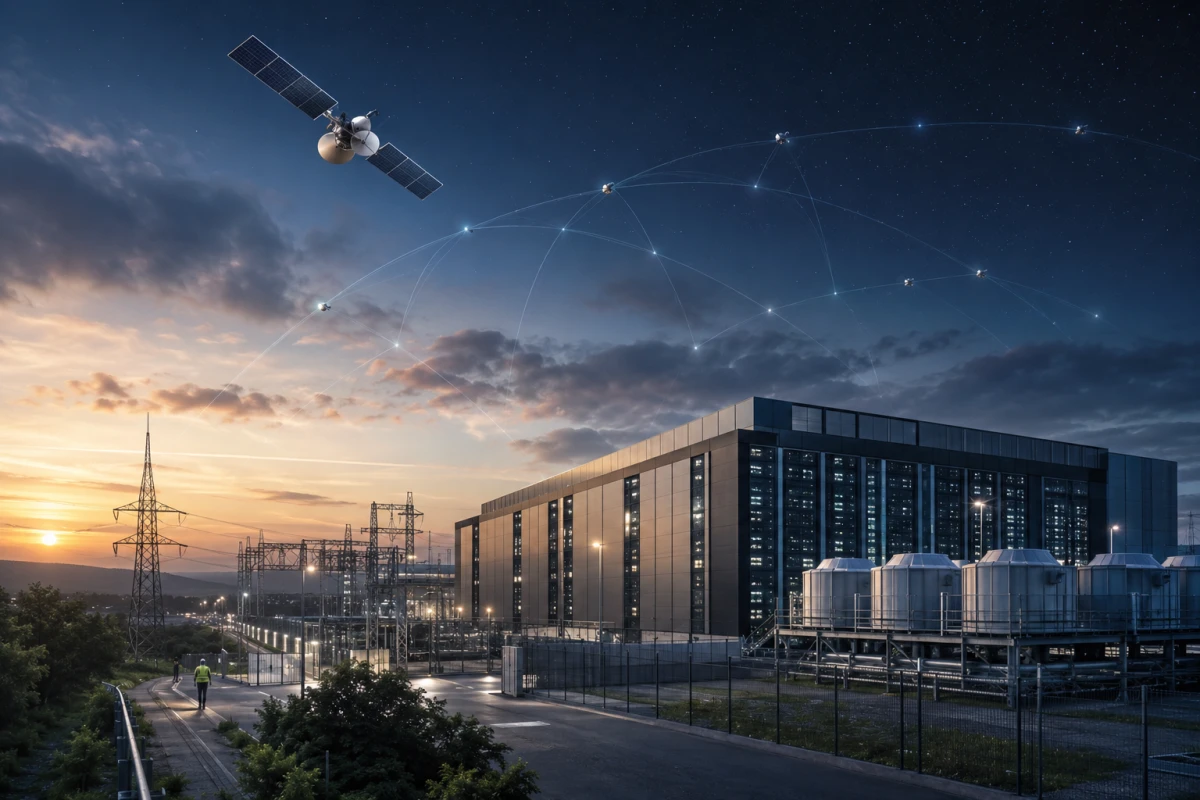
Just a few years ago, xAI was a standalone AI company and SpaceX was primarily associated with rockets and satellites. Today, Grok, X, expanding AI compute, Starlink and launch infrastructure are being brought together within the same corporate structure – while SpaceX is also outlining plans for AI compute in orbit. That raises questions about transparency, accountability and who can influence a system as more layers move closer together.
From separate companies to a larger structure
It is easy to think of SpaceX, xAI and X as separate stories. SpaceX is associated with rockets, Starlink with satellite connectivity, xAI with the Grok AI model and X with a social platform. But changes in ownership have altered that picture.
According to SpaceX’s prospectus, xAI acquired X Holdings on March 28, 2025. On February 2, 2026, SpaceX’s acquisition of X.AI Holdings, which includes xAI, became effective. SpaceX now reports three major segments: Space, Connectivity and AI. The AI segment includes AI compute, Grok and X. Starlink is reported within Connectivity, while rockets and spacecraft belong to the Space segment.
This is a documented ownership and corporate structure, but it needs to be described precisely. It shows that more components are being brought under the same corporate umbrella. It does not, by itself, show that every system already operates as a single technical or operational machine, or that data and capacity can move freely between all parts of the group. SpaceX’s own material describes the AI segment as still undergoing integration and optimization.
That distinction matters. Ownership can be consolidated faster than technology, organizations and everyday operations can be integrated. Even so, the change is significant: the same corporate structure now includes Grok, X, AI compute, Starlink and rocket and satellite infrastructure.
Colossus is the engine on the ground
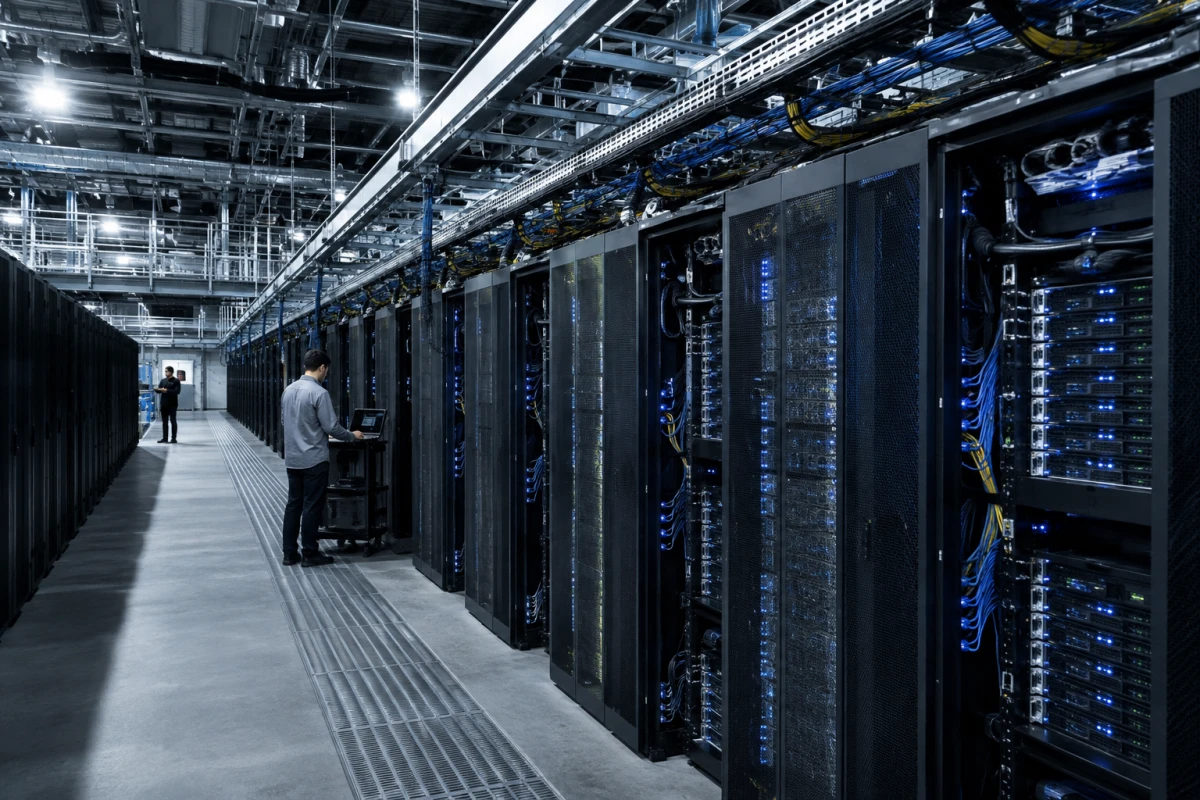
The most concrete part of the expansion is still firmly on Earth. SpaceX describes COLOSSUS as its flagship data center on Paul R. Lowry Road in Memphis. COLOSSUS II is described as an AI training cluster with data centers in Memphis and Southaven, Mississippi. This is where the computing capacity used to train and run advanced AI systems is being built.
In its prospectus, SpaceX says the first Colossus cluster included around 100,000 NVIDIA H100 processors and approximately 130 MW of “compute power.” For COLOSSUS II, the company describes two clusters: one with around 110,000 GB200 processors and 210 MW of compute power, and another with around 110,000 GB300 processors and 220 MW. SpaceX also describes a future phase with at least approximately 220,000 additional GB300 processors and more than 400 MW of additional compute power when fully operational.
The figures indicate the scale of the infrastructure, but they are SpaceX’s own capacity descriptions rather than an independent physical inventory. They do not show how the GPUs are distributed between locations, how heavily they are being used at any given time or the actual electricity consumption of the facilities as a whole.
An important technical distinction can otherwise easily disappear in very large numbers. SpaceX also reports a metric called “Nameplate Compute Draw.” The company defines it based on the number of installed GPUs multiplied by their respective all-in power draw. It measures the nominal power requirement of the installed GPU hardware, not actual instantaneous or annual electricity consumption. It also does not indicate utilization and excludes, among other things, cooling, distribution losses, lighting, security and other facility overhead.
Large compute figures are therefore not, by themselves, an answer to how large the energy burden actually is. That requires additional documentation, including site-specific measurements and information about cooling and grid connections.
Compute has also become a business
Colossus is not being built only for SpaceX’s and xAI’s own AI operations. According to SpaceX’s SEC material, the company has also signed large compute agreements with external customers. That makes the facilities more than internal technical infrastructure: they are also becoming a commercial service.
SpaceX says an agreement with Anthropic from May 2026 covers compute across COLOSSUS and COLOSSUS II equivalent to around 325,000 NVIDIA GPUs. The prospectus describes a ramp-up during May and June, approximately $1.25 billion per month through May 2029, and termination provisions. That means capacity has been contracted. It does not prove that all of those GPUs are being used continuously, or that the contracted volume represents a separate physical inventory that can simply be added to the clusters SpaceX already describes.
A separate Rule 433 filing from June describes a Cloud Service Agreement with Google. It states capacity equivalent to around 110,000 NVIDIA GPUs, a ramp-up through September 2026 and fees of approximately $920 million per month from October 2026 through June 2029, subject to specific delivery and termination provisions.
Together, the agreements show that SpaceX is not only building compute for its own AI operations. The Anthropic and Google agreements show that the company is also selling compute capacity as a commercial service. But contracted capacity is not the same as capacity already delivered, verified continuous use or revenue that can simply be assumed in advance.

NVIDIA is central – but the relationship is not fully clear
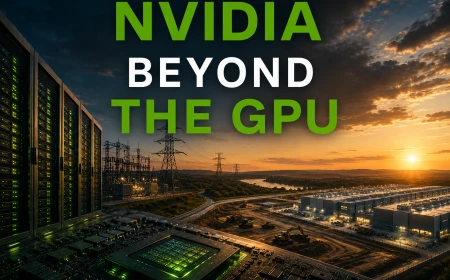
NVIDIA is clearly present in the ground-based compute infrastructure. SpaceX’s prospectus describes NVIDIA processors across several Colossus clusters, and NVIDIA has previously described a 100,000-Hopper-GPU cluster for xAI in Memphis.
NVIDIA also says that an early Vera CPU system was delivered to SpaceXAI in Palo Alto in May 2026. According to NVIDIA, SpaceXAI is evaluating the system for reinforcement learning and agent-based simulation workflows. This is a concrete example of an early delivery and evaluation, but it is not evidence of production deployment, volume deliveries or installation in Colossus.
In reporting on SpaceX’s Q2 call, Axios quoted Elon Musk as saying that the company had decided to build “exclusively on Nvidia,” referring to the Vera Rubin architecture. NextNet has not, however, found evidence of a formal exclusivity agreement. A reported verbal statement about strategic direction is not the same thing as a publicly documented binding supplier contract.
The picture becomes more nuanced in SpaceX’s Starmind material. There, the proposed orbital system architecture is described as chip-vendor agnostic. The same material also outlines plans for advanced in-house AI chip production through Terafab. These points do not necessarily conflict: an architecture can be designed to support multiple chip options while ground-based compute relies on a particular supplier and the company, over the longer term, seeks to develop its own hardware. But the exact relationship between these layers has not been publicly disclosed.
That makes it a reasonable question for continued scrutiny rather than a finished conclusion.
From Colossus on Earth to Starmind in space
The most far-reaching part of SpaceX’s plan is the idea of moving parts of AI compute into orbit. The building blocks already exist on Earth: Starlink is an operational satellite network, SpaceX has launch capability and Colossus demonstrates how the company is building large-scale compute. The final piece – AI compute in space – remains a plan.
In its SEC prospectus, SpaceX says it expects to begin deploying orbital AI compute satellites as early as 2028. On the newer Starmind page, the company says the Gigasat Factory in Bastrop is intended to enable rapid production and deployment of thousands of AI satellites beginning as early as late 2027. These are two different public timelines. They are not enough to establish that the timetable has formally moved, because they may refer to different stages: manufacturing, testing, satellite deployment or operational compute capacity.
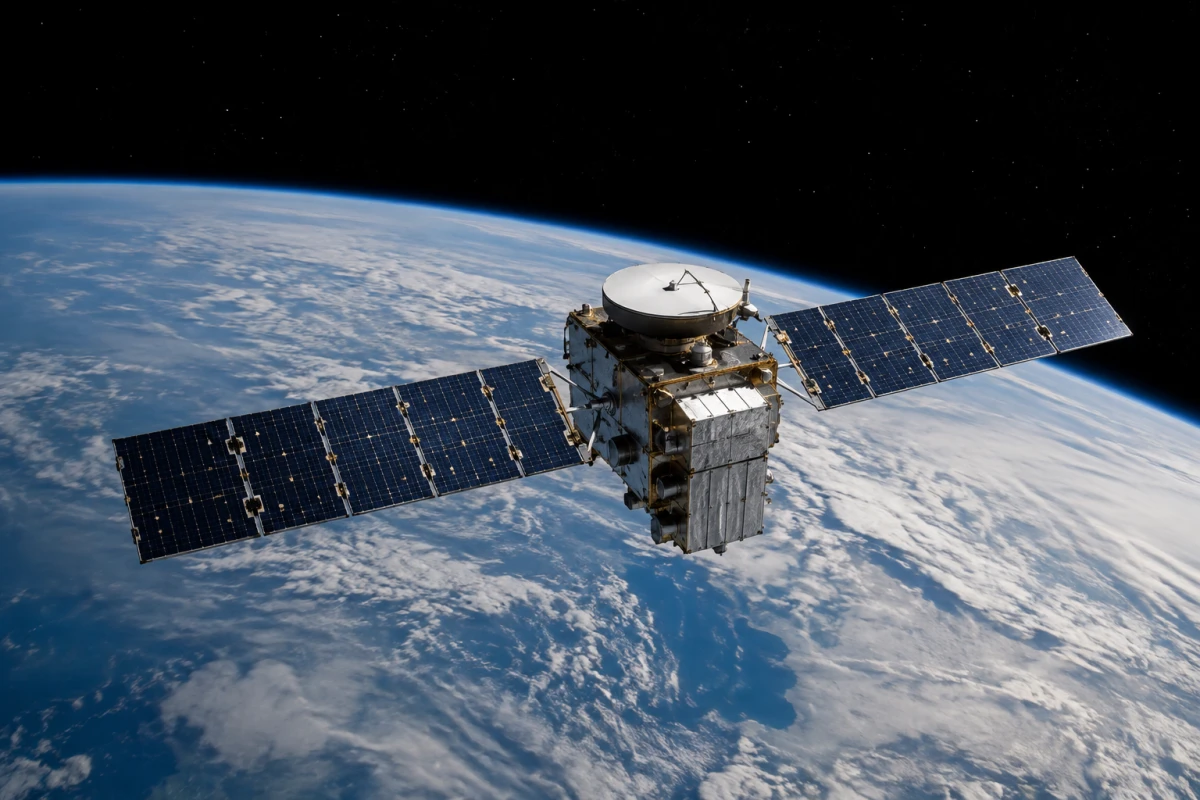
Starmind provides a picture of the proposed architecture. SpaceX describes AI1 as a planned satellite design with a deployed height of 20 meters, a 70-meter span and a compute payload of up to 150 kW, or 120 kW on average. The plan includes large solar arrays, radiative thermal management, laser links through Starlink and a sun-synchronous orbit. Starship is intended for mass deployment, while the Bastrop factory is expected to enable production.
Starmind is currently a presented architecture and roadmap, not an operational service. It shows how SpaceX intends to connect chips, satellite production, communications and launch capabilities. But the material reviewed by NextNet does not establish that AI1 has already been launched or that the company is operating a large orbital data center.
The physical cost already exists on Earth
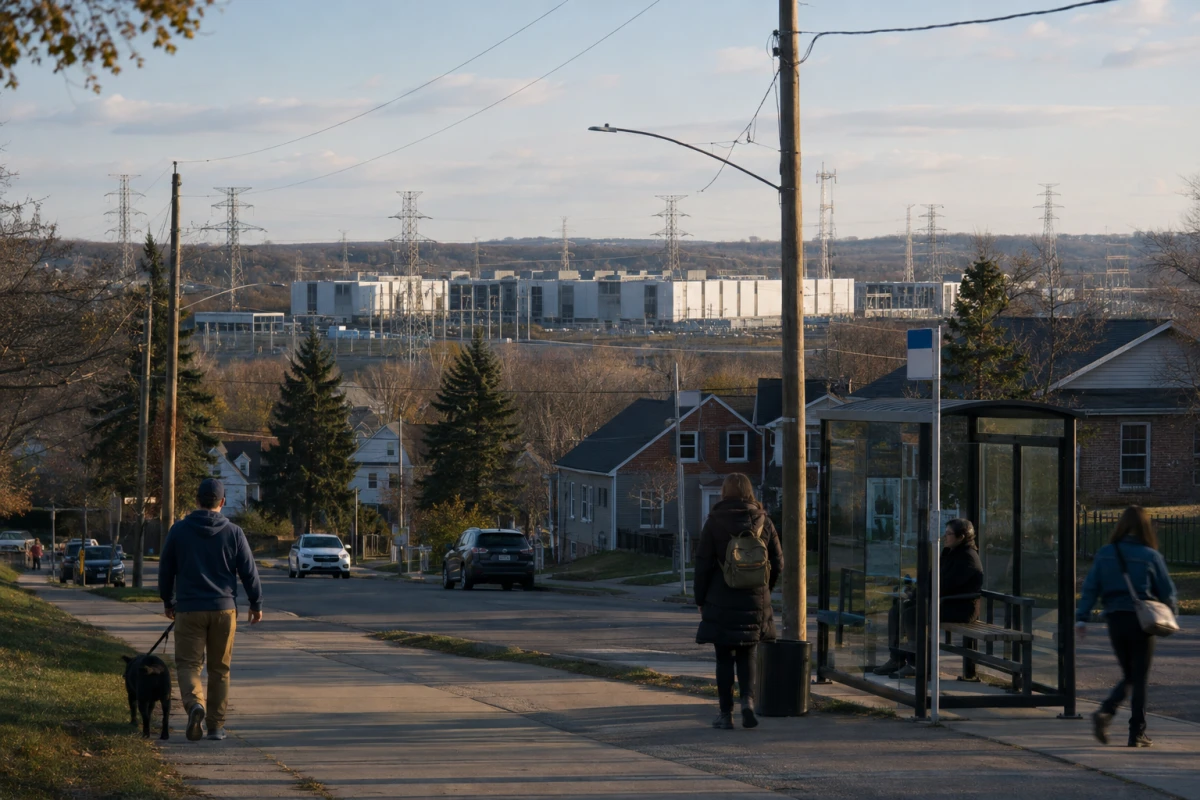
Even as the story increasingly reaches toward space, AI infrastructure is already deeply physical on Earth. Data centers require land, buildings, cooling, electricity, grid connections and, in some cases, on-site power generation. They also affect the communities where the facilities are built.
In Memphis, the Shelby County Health Department issued a permit in 2025 for 15 permanent turbines at Colossus I. In Southaven, Mississippi’s environmental agency MDEQ issued a PSD permit in March 2026 allowing construction of 41 permanent gas turbines for MZX Tech. The permit was appealed in April 2026. At the time of NextNet’s review, no later decision had been verified.
Temporary or mobile turbines in Southaven have also become a regulatory and local issue. The available sources refer to different dates, numbers and categories and cannot be treated as a single common measure. The material includes permit limits, modeled calculations and journalistic document reviews, but no public site-specific series of verified continuous emissions measurements. Modeled or permitted emissions are not the same as measured emissions.
A federal Clean Air Act case has been brought by the NAACP and NAACP Mississippi State Conference against X.AI Corp. and MZX Tech LLC. The plaintiffs allege that certain temporary turbines lacked required permits and controls. On June 16, the U.S. Department of Justice said it had sought to intervene and have the case dismissed. That is a procedural action and the DOJ’s legal position, not a court ruling. A complete picture of energy, water, emissions and local impact still requires continued site-specific scrutiny.
SpaceX was given an opportunity to respond
NextNet sent questions to SpaceX on August 8, 2026. They covered vertical integration and accountability, NVIDIA, orbital AI compute and the 2027/2028 timelines, local communities, energy and the environment, as well as public transparency and human interests. SpaceX was given until August 11, 2026 at 5:00 p.m. ET to respond. At the time of NextNet’s review, no response from SpaceX had been received.
The larger question is who can see and influence the whole
Each part of this development can be examined separately: a data center, an AI model, a social platform, a satellite network, a rocket or a chip project. But when more of these components are brought together within the same corporate structure, questions also emerge that are harder to separate.
It is NextNet’s analysis – not a claim about SpaceX’s or Musk’s motives – that this kind of concentration can change the conditions for transparency and accountability. Who can develop a comprehensible picture of the connections between compute, energy, distribution, satellite networks and launch capabilities? Which authorities can see the entire chain when different parts fall across separate sectors and jurisdictions? And what opportunities do local communities, customers, competitors and the public have to influence decisions that may have consequences far beyond a single facility?
There is also a counterargument that deserves to be taken seriously. Vertical integration can enable faster development, reduce external dependencies, improve technical coordination and, in some cases, lower costs. SpaceX itself emphasizes the advantages of developing and controlling more of the building blocks within a connected infrastructure. Centralization is therefore not automatically harmful, nor does it by itself establish anything about motives or outcomes.
But as more layers are built within the same structure, the need for clear distinctions and public understanding also grows. What is operational? What has been contracted? What is still being integrated? What remains a plan? Those questions are essential if the discussion is to focus on what is actually being built – rather than exaggeration in either direction.
NextNet will continue following the development and may return to the parts that remain unresolved.
💬 What do you think?
As AI, communications and space infrastructure move closer together, which opportunities and risks do you think matter most? And what would be needed for people and local communities to understand and influence the development?
Vad är din reaktion?
 Gilla
0
Gilla
0
 Ogilla
0
Ogilla
0
 Kärlek
0
Kärlek
0
 Rolig
0
Rolig
0
 Wow
0
Wow
0
 Ledsen
0
Ledsen
0
 Arg
0
Arg
0

Hej, jag heter Staffan Carlsson
Jag är grundare och ansvarig utgivare för NextNet.se – en svensk nyhetsplattform med fokus på artificiell intelligens, teknik, cybersäkerhet och digital innovation.
Varför NextNet?
Jag startade NextNet med målet att skapa en modern och lättillgänglig nyhetssajt där teknik och AI står i centrum. Den tekniska utvecklingen går snabbare än någonsin, och jag tror att det är viktigare än någonsin att kunna förstå vad som händer – utan att behöva vara expert.
Genom NextNet vill jag lyfta fram nyheter, analyser och trender som hjälper läsare att navigera i en allt mer digital värld.
Mitt teknikintresse
Teknik har varit en stor del av mitt liv under många år. Jag fascineras av hur innovation, internet och artificiell intelligens förändrar sättet vi arbetar, kommunicerar och bygger framtidens samhälle.
Utöver arbetet med NextNet ägnar jag mycket tid åt webbplattformar, servermiljöer, AI-lösningar och digitala projekt där nyfikenhet och lärande alltid står i centrum.
Min vision
Jag vill att NextNet ska vara en trovärdig och inspirerande källa för alla som vill följa utvecklingen inom AI, teknik och digitalisering – oavsett tidigare kunskapsnivå.
AI-drivna nyheter för en digital värld.















Kommentarer (0)