
How Much of the AI Stack Can NVIDIA Control?
NVIDIA's reach extends from GPUs and networking to infrastructure financing and the planned acquisition of Hugging Face. NextNet examines the benefits, dependencies and limits of influence across the AI stack.
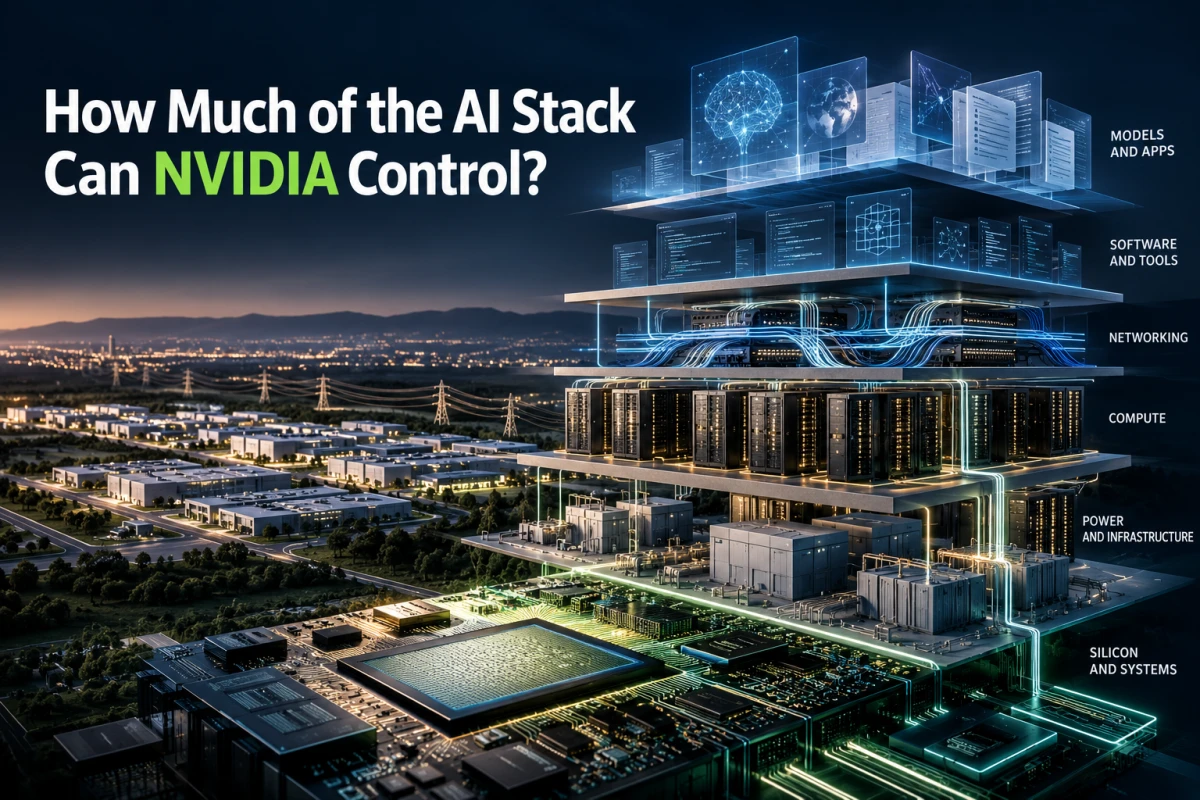
The GPU company is moving up - and down - the stack
A useful way to understand NVIDIA's expansion is to follow an AI application backward. A model needs software and compute. Compute needs connected systems. Those systems need buildings, electricity and capital. A company can become influential at several of those junctions without owning the entire chain.
NVIDIA's technical reach already extends beyond the processor. Its CUDA platform connects software development to GPU computing, while its NVLink Fusion partnership with Marvell encompasses custom accelerators, CPUs, interconnects and networking around rack-scale infrastructure.
The proposed Hugging Face acquisition adds a different possibility: a closer relationship with the place where developers discover and share models. Ohio adds another: credit support and contractual rights surrounding physical capacity. These are different forms of influence, with different limits.
Hugging Face puts NVIDIA closer to the developer
According to NVIDIA's September 2 Form 8-K, the company signed a definitive agreement that day to acquire Hugging Face. The filing describes approximately $11.9 billion payable to stockholders, subject to adjustments, plus an equity retention program of up to approximately $1 billion for joining employees. Closing is expected in the first half of 2027, subject to conditions including regulatory approvals. This is an agreed transaction, not a completed acquisition.
In the announcement published by Jensen Huang, NVIDIA gives a headline price of $12,930,300,000 and describes a platform used by more than 18 million developers, researchers and creators, with more than 3 million models, 500,000 datasets, 1 million applications and more than 200,000 companies.
Those company-reported figures explain the strategic attraction. A model platform can influence the route from experimentation to deployment. Ownership could put NVIDIA closer to decisions about tooling and developer support, even when the eventual application runs elsewhere. It would not transfer ownership of every hosted model to NVIDIA.
The promise: Hugging Face stays open
Huang says users will retain their choice of models, frameworks, clouds, inference providers and computing platforms. He explicitly says NVIDIA compute will not be required. These are NVIDIA's commitments about future operation; their practical implementation remains something to assess over time.
Hugging Face's leadership also presents the deal as a way to expand. In Times Brasil–CNBC's account of his September 3 interview, Clément Delangue said the open AI ecosystem needed greater resources, scale and visibility, and that Hugging Face approached Huang. That supports the resource argument without establishing how future independence would work.
The practical test is broader than whether downloading remains possible. Can developers deploy efficiently on other hardware? Are integrations and support maintained across providers? Do users receive meaningful choices when they move from a model page to a paid service? These are questions for scrutiny, not findings that NVIDIA has already favored itself.

Ohio shows a different kind of influence
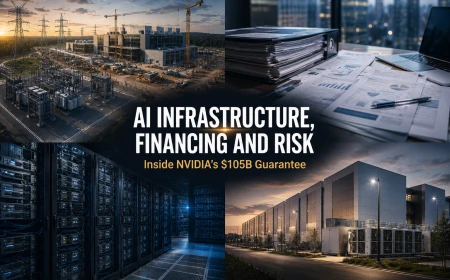
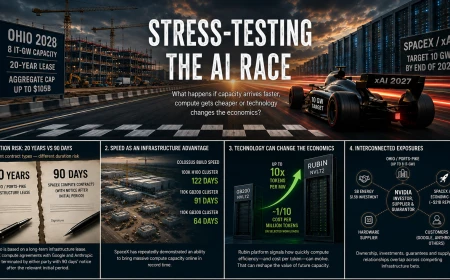
NVIDIA's August 17 filing describes a partnership with SB Energy at the PORTS Technology Campus in Pike County, Ohio. An OpenAI affiliate is the tenant. Initial guarantees relate to approximately 4.25 gigawatts of IT load, with aggregate payments capped at $105 billion and subject to conditions. A guarantee cap is neither an investment amount nor a payment or loss already incurred.
The public Form of Residual Value Guaranty, Exhibit 10.31 identifies NVIDIA as Guarantor. Its Project Agreements comprise the lease, power purchase agreement and transmission agreement. Section 16(c) requires written consent for amendments and protects NVIDIA against unapproved terms. Portions are redacted.
NextNet previously examined the guarantee's risk structure. Here its significance is the connection between roles: a technology supplier also has a contractual say over changes affecting the infrastructure behind its systems. That right can protect the risk it accepts. It does not establish ownership of the campus, OpenAI or SB Energy.
A supplier with rights when things go wrong
Section 12 of the same exhibit provides a cure right and a conditional process following specified tenant defaults. After the required notice and verification stages, options include lease assumption by NVIDIA or a designated entity, replacement-tenant efforts, a sale process, termination, or deferral for up to a year while paying specified costs. These routes are subject to conditions, several of which are redacted.
The distinction between an option and an outcome is essential. Requiring efforts to find another tenant does not guarantee one exists. A sale process does not guarantee a price. The public form does not establish a general right to choose every replacement tenant or impose NVIDIA hardware on one.
This creates potential influence during a project crisis, alongside potential costs. Credit support gives NVIDIA a reason to care about what happens after a customer fails; it does not make the company immune to that failure.
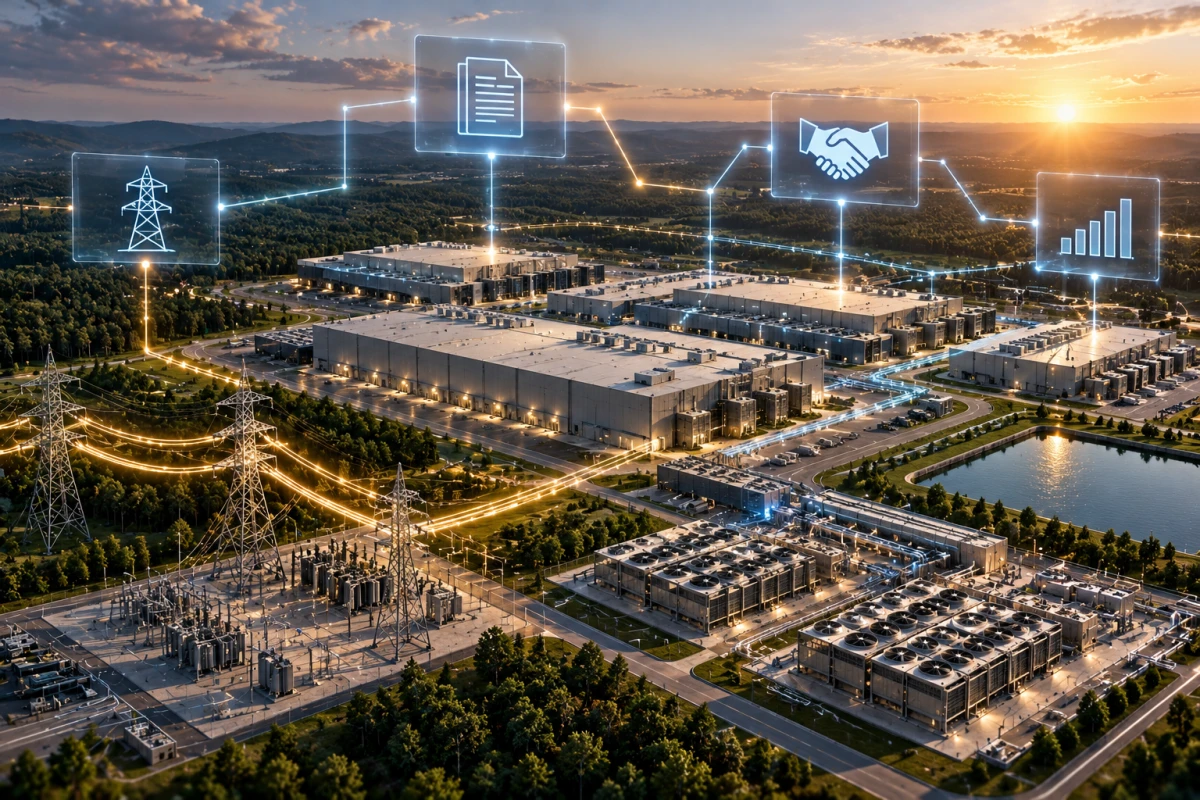
Financing infrastructure can also secure future demand
The wider financing strategy points in the same direction. NVIDIA's August 10 announcement with six financial institutions described memorandums of understanding aimed at mobilizing more than $500 billion of third-party capital over time. An announcement of that ambition does not establish a completed fund or NVIDIA spending that amount.
As Reuters reported on September 3, in its KSL republication, NVIDIA's balance-sheet support for infrastructure has raised investor concerns about the company supporting demand behind its own growth. Reuters also describes customer chip development as a competitive pressure. Neither point demonstrates that future demand is artificial or that the financing is improper.
The economic question is whether projects will attract enough paying use to justify their costs. Financing can make a deployment possible and bring future equipment purchases forward. It cannot by itself ensure that the services running on that equipment will earn satisfactory returns.
The advantages of a more integrated stack
There is a substantial potential benefit in coordinating these layers. A customer assembling compute, networks and software can encounter bottlenecks between components. Better integration can reduce that work. Capital and credit support can help projects move beyond planning, while a larger engineering base could give an open-model platform more capacity and reliability.
These benefits depend on delivery, price and access. A university or startup could benefit from improved model hosting without buying a complete NVIDIA system. A large enterprise could value a coherent infrastructure platform because it reduces the number of interfaces it must manage.
Morningstar analyst Brian Colello's September 3 assessment sees both an offensive and a defensive rationale: strengthen NVIDIA's open-model position while preparing for customers to use more of their own chips. He also identifies a plausible risk if NVIDIA tilts the platform toward itself. This is an analyst's strategic judgment, not a guarantee of successful integration.
The useful assessment is therefore how much efficiency this concentration creates, which dependencies accompany it, and whether competitive choices remain practical as the layers become more connected.
The risks of dependence
Dependence can grow without a formal requirement to buy from one supplier. If a team builds expertise around a particular software stack, optimizes its workloads for it and finances equipment on a long timetable, changing direction can require several decisions at once.
For a model platform, neutrality involves the experience of competing providers as well as the stated terms of access. For infrastructure, it involves the interaction between technical requirements and commercial commitments. A permitted alternative may still be costly to adopt.
That is a reason to ask for evidence about portability, support and switching costs. It is not evidence of a monopoly, discriminatory conduct or a regulatory violation. The planned acquisition also remains subject to regulatory approval; approval itself should not be assumed.
The reviewed material does not establish a comparable public objection from a major rival to the acquisition. That limited finding cannot be read as competitor approval.
NVIDIA still has powerful competitors
Customers retain their own strategic agendas. OpenAI describes working custom inference silicon, Jalapeño, and a diversified infrastructure portfolio that includes NVIDIA alongside other suppliers. Its account emphasizes choosing systems for capability and economics. These are OpenAI's statements, not independent validation of its performance claims or evidence that it has abandoned NVIDIA.
Alternative software is another route. AMD's HIP documentation describes porting CUDA applications to its GPU environment. Such tools make migration a concrete engineering path, while application compatibility and performance still need to be tested.
NVIDIA's response can also preserve its relevance. NVLink Fusion is designed to connect custom silicon to its surrounding infrastructure. A customer might replace an accelerator for a workload and retain other NVIDIA components. Conversely, a credible option to move even part of a workload can strengthen the customer's bargaining position.
Hyperscalers and major AI customers therefore compete with suppliers at some layers while buying from them at others. Competition need not replace an entire stack to change its economics.
China is building routes around NVIDIA
China adds another source of competitive pressure. In the accessible summary of her September 7 Reuters Breakingviews column, Robyn Mak argues that Chinese chipmaking challengers, including Enflame, are eroding NVIDIA's position through their own software and easier migration. This is Breakingviews analysis, not an independently verified measure of displacement.
Huawei provides a primary-source example of the software effort. Its Ascend ecosystem announcement describes opening foundational software and collaborating with projects including PyTorch, Triton and vLLM. That shows an effort to build an alternative development environment; it does not establish equivalent performance or effortless compatibility.
The strategic implication is that NVIDIA's advantages face pressure from several directions: alternative chips, software migration and local ecosystems. These efforts do not amount to an immediate global replacement. Customers still have to evaluate availability, reliability, costs and the work required to move real applications.
So how much can NVIDIA control?
NVIDIA has a wider strategic reach than a conventional chip supplier. The proposed Hugging Face purchase would extend that reach toward the model and developer layer. Ohio demonstrates a separate connection between compute, credit support and contractual influence over physical infrastructure.
Yet those connections do not add up to complete control. NVIDIA's own acquisition filing identifies reliance on third-party manufacturing and regulatory risks. Physical deployments depend on utilities and infrastructure delivery. Customers decide which workloads to fund, cloud providers mediate access, and capital providers judge whether projects offer acceptable returns.
The strongest position may be to remain useful across several choices a customer makes. The limit is that each of those relationships also creates a dependency for NVIDIA. Its influence can grow while its commitments, exposure and need for partners grow alongside it.
Control remains incomplete and contested. The question is how meaningful the alternatives remain when technical convenience, developer habits and financial commitments reinforce one another.
💬 What do you think?
At what point does supplying the compute, helping finance the infrastructure and expanding into a major model platform begin to resemble control — even when customers technically retain alternatives?
Share your thoughts in the comments.
📚 Related articles
NVIDIA and the AI stack: key questions
Vad är din reaktion?
 Gilla
0
Gilla
0
 Ogilla
0
Ogilla
0
 Kärlek
0
Kärlek
0
 Rolig
0
Rolig
0
 Wow
0
Wow
0
 Ledsen
0
Ledsen
0
 Arg
0
Arg
0

Hej, jag heter Staffan Carlsson
Jag är grundare och ansvarig utgivare för NextNet.se – en svensk nyhetsplattform med fokus på artificiell intelligens, teknik, cybersäkerhet och digital innovation.
Varför NextNet?
Jag startade NextNet med målet att skapa en modern och lättillgänglig nyhetssajt där teknik och AI står i centrum. Den tekniska utvecklingen går snabbare än någonsin, och jag tror att det är viktigare än någonsin att kunna förstå vad som händer – utan att behöva vara expert.
Genom NextNet vill jag lyfta fram nyheter, analyser och trender som hjälper läsare att navigera i en allt mer digital värld.
Mitt teknikintresse
Teknik har varit en stor del av mitt liv under många år. Jag fascineras av hur innovation, internet och artificiell intelligens förändrar sättet vi arbetar, kommunicerar och bygger framtidens samhälle.
Utöver arbetet med NextNet ägnar jag mycket tid åt webbplattformar, servermiljöer, AI-lösningar och digitala projekt där nyfikenhet och lärande alltid står i centrum.
Min vision
Jag vill att NextNet ska vara en trovärdig och inspirerande källa för alla som vill följa utvecklingen inom AI, teknik och digitalisering – oavsett tidigare kunskapsnivå.
AI-drivna nyheter för en digital värld.











Kommentarer (0)